

30º FANTASIA FILM FESTIVAL | Unholy Night, de Michael Gabriele (Idem, 2026)

Com o retorno dos mortos na ceia de Natal, Unholy Night se inspira em Evil Dead e desvia dos clichês de filmes de zumbis, mas se atrapalha na construção de uma mitologia própria.

Como alguém, pelo lado de mãe, proveniente de uma família de descendentes de italianos católicos, posso dizer que a atmosfera acolhedora de um Natal todos juntos é muito bem representada desde os primeiros instantes de Unholy Night, quando uma jovem, em algum momento da primeira metade do século XX, transita pela sala de estar de sua casa, cheia de pessoas próximas, carregando uma bandeja com aperitivos. O amor está impresso no olhar da garota para o pai, no sorriso que esboça no rosto enquanto observa a confraternização da família ao seu entorno, e no prazer de auxiliar a mãe, tudo reforçado pela trilha sonora, que embala a cena em uma música italiana calma e de alegria. Mas essa atmosfera dura pouco, quando, ao fundo, vemos de relance uma pessoa sendo arremessada sobre uma mesa, e sons de pele rasgando, ossos quebrando e sangue sendo derramado ecoa da sala que antes era preenchida por vozes e risadas. Em seguida, uma pessoa de aparência envelhecida, e olhos alaranjados brilhantes, passa a perseguir a personagem, salva pelo sacrifício do próprio pai, que se coloca a frente dela.
Anos se passam, e agora no presente, uma nova reunião familiar acontece. Pai, mãe, filhos, noras, genros e sobrinhos pela casa. Eles se cumprimentam com alegria, dão pitaco na cozinha, e durante a ceia, sempre surgem aquelas perguntas inconvenientes, histórias do passado constrangedoras e a pequena torta de climão. No caso, a vítima da vez é justamente o protagonista, talvez o mais desajustado da família em termos profissionais e de vida amorosa, embora reforce estar feliz com seu trabalho como vendedor de tintas, e tente juntar os pedaços de seu relacionamento anterior, quando a ex-namorada, por quem ainda nutre sentimentos, reaparece de supetão em sua porta.
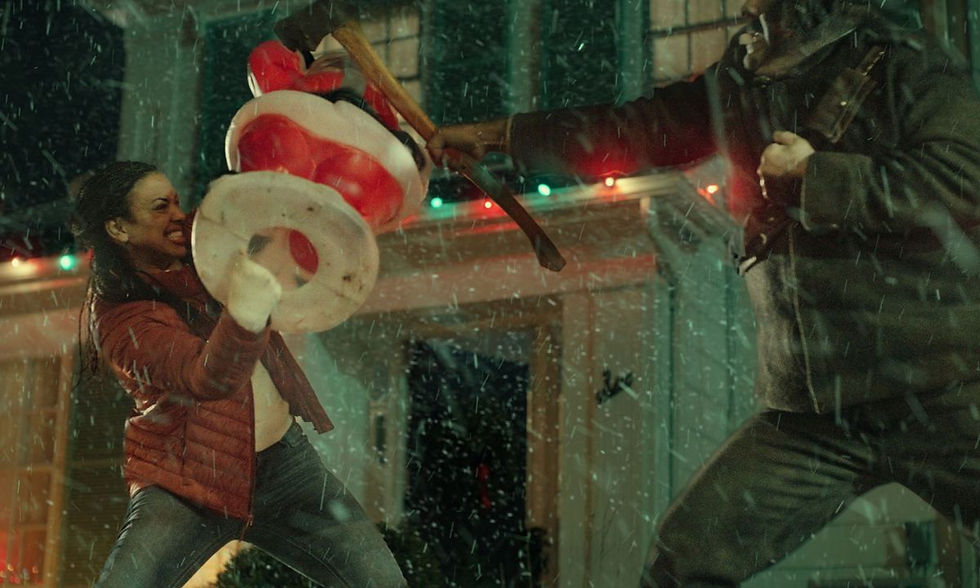
Tudo desanda quando, durante a ceia, a avó, há anos falecida, reaparece na cozinha, estressada e com ares grosseiros, como se nada houvesse acontecido. Contrariada, seus olhos se tornam amarelos e brilhantes, e ataca os familiares com extrema violência. Entre momentos de pânico generalizado e tentativas de contê-la, algo parece estranho enquanto, em determinados momentos, é tomada por calmaria e lucidez.
Em uma espécie de mistura, no tocante ao comportamento, entre zumbis e os deadites de Evil Dead (de certo uma das grandes inspirações aqui), Michael Gabriele se esforça para construir sua narrativa a partir da esquiva das obviedades que o gênero pode, inevitavelmente, oferecer. Torna-se divertido acompanhar a jornada do protagonista Gino, e seu interesse romântico Rene (ambos bem vividos por Marc Bendavid, novamente em um filme de Natal, mas agora de terror; e Shailene Garnett), enquanto investigam alternativas para sobreviver àquele ambiente.
Levantando diversas teorias, como uma antiga maldição italiana e a possibilidade de que os mortos retornaram para cumprir missões inacabadas na terra, ambos transitam por locais específicos da cidade acompanhando determinados comportamentos, tanto dos vivos correndo quanto dos mortos os perseguindo, como forma de tentar achar uma solução. As reviravoltas são previsíveis, mas funcionam como um alarme falso divertido para levar a trama para outros caminhos, ao passo que as tentativas de lidar com a situação, e eventualmente resolver o problema, os forçam a sentar para conversar, como uma família. Algumas roupas sujas são lavadas entre os irmãos, e diálogos sinceros são travados com a avó, como aquilo que nunca fora dito entre eles, sobretudo em seus últimos dias, quando no hospital. Essa veia dramática é bastante explorada por Gabriele, como respiros em meio à violência e à ação capazes de arrancar lágrimas dos espectadores mais emocionados, sempre nos intervalos entre os banhos de sangue, retomados de tempos em tempos.
Acontece que, por outro lado, Unholy Night, durante a maior parte do tempo, apenas levanta hipóteses, mas custa em determinar uma resposta ao mistério que circunda seus personagens. Ao ir e voltar em suas linhas investigativas, muitas vezes resultando em becos sem saída, a solução encontrada para sustentar o terço final trabalha algumas ideias visualmente (e os efeitos, mesmo que inacabados na cópia que assisti, estavam bem trabalhados), mas abandona a ideia de ir adiante em uma possível mitologia. Ao optar novamente pelo aspecto dramático, soa uma resolução piegas quando anteriormente o terror se manifestava por aspectos gráficos e, no absurdo, a comédia acompanhava. Acaba que o desfecho não encontra respaldo no apresentado pela própria obra, e ao final decepciona pela falta de uma amarra nas teorias que sugere, ainda mais ao abandonar o tenso prólogo sem uma importância maior, senão por um trauma de infância de uma das personagens – o que, considerando o fato de já ter vivido momentos parecidos, não ter ideias de como sair daquela situação se torna até inverossímil.
Mesmo assim, Unholy Night segue como um divertido exemplar de horror natalino, que mesmo sem aproveitar tanto do espírito da data em seu desenrolar, senão para um pretexto de reunião familiar, arranca tanto boas risadas como lágrimas, e até consegue assustar, de forma protocolar, mas eficaz. E se amarrasse então um pouco mais de sua mitologia, apenas teria a ganhar da confiança do espectador, ao recompensá-lo formando suas próprias teorias e imaginando o que pode estar, de fato, acontecendo naquela realidade.
Avaliação: ★★★
Unholy Night (Idem, 2026)
Direção: Michael Gabriele
Roteiro: Michael Gabriele
Gênero: Terror, Thriller, Comédia
Origem: Canadá
Duração: 91 minutos (1h31)
Exibido no 30º Fantasia Film Festival
Sinopse: A tradicional ceia de Natal da família de Gino se transforma em uma sangrenta luta pela sobrevivência quando sua avó, morta há muito tempo, aparece de surpresa e inicia uma onda de assassinatos. Em meio ao caos, Gino reencontra sua ex-namorada, e a dupla disfuncional precisa escapar de seus parentes italianos mortos, que continuam surgindo por toda a vizinhança, enquanto busca uma maneira de se livrar desses revenantes natalinos e sobreviver ao Natal em família.
English review
With the dead returning during Christmas dinner, Unholy Night draws inspiration from Evil Dead while avoiding the usual zombie movie clichés, though it stumbles when attempting to establish a mythology of its own.
As someone whose mother's side of the family descends from Italian Catholics, I can say that the warm atmosphere of a Christmas celebration surrounded by loved ones is beautifully captured from the very first moments of Unholy Night. A young woman, sometime during the first half of the twentieth century, walks through her family's living room carrying a tray of appetizers. The room is filled with relatives, and love is evident in the way she looks at her father, in the smile that forms on her face as she watches the gathering around her, and in the joy she finds in helping her mother. Everything is reinforced by the soundtrack, which accompanies the scene with a gentle, joyful Italian song. That comforting atmosphere, however, lasts only a few moments. In the background, we briefly glimpse someone being thrown across a table, while the sounds of tearing flesh, breaking bones, and spilling blood replace the voices and laughter that had previously filled the room. Moments later, an elderly figure with glowing orange eyes begins pursuing the young woman, who survives only because her father sacrifices himself to protect her.
Years later, in the present day, another family gathering takes place. Parents, children, spouses, and nephews all reunite beneath the same roof. They greet each other warmly, offer unsolicited advice in the kitchen, and, as Christmas dinner unfolds, the inevitable awkward questions, embarrassing family stories, and uncomfortable silences begin to surface. This time, the primary target is the protagonist, perhaps the least successful member of the family in both his professional and romantic life. Although he insists he is content working as a paint salesman, he is still struggling to recover from a failed relationship when his former girlfriend - for whom he clearly still has feelings - unexpectedly appears at his doorstep.
Everything falls apart when, during dinner, the family's grandmother, who died years earlier, suddenly walks into the kitchen behaving as though nothing had happened. Irritable and unusually aggressive, her eyes gradually turn bright yellow, and she launches an extremely violent attack on the rest of the family. Amid the ensuing panic and desperate attempts to restrain her, something feels strangely inconsistent, as brief moments of calmness and lucidity unexpectedly interrupt her murderous outbursts.
Blending behavioral elements from both traditional zombies and the Deadites of Evil Dead - undoubtedly one of the film's greatest influences - Michael Gabriele makes a clear effort to avoid the obvious conventions that inevitably accompany the genre. It becomes genuinely entertaining to follow the journey of protagonist Gino and his romantic interest Rene (both convincingly portrayed by Marc Bendavid - once again appearing in a Christmas film, though this time within the horror genre - and Shailene Garnett) as they desperately search for ways to survive the increasingly chaotic situation.
As they formulate various theories - ranging from an ancient Italian curse to the possibility that the dead have returned to complete unfinished business - the pair travels through different parts of town, observing the unusual behavior of both the living fleeing in terror and the dead relentlessly pursuing them in hopes of discovering a solution. The narrative twists may be predictable, but they function as enjoyable false alarms that continually redirect the story toward new possibilities. Meanwhile, every failed attempt to resolve the crisis forces the family members to sit down together and truly communicate. Long-buried grievances finally come to light between siblings, while heartfelt conversations take place with their grandmother, allowing words left unsaid during her final days in the hospital to finally be spoken. Gabriele leans heavily into this emotional dimension, offering moments of genuine tenderness between bursts of violence and bloodshed that are capable of moving even the most emotional viewers to tears.
The problem is that, for most of its runtime, Unholy Night is far more interested in proposing theories than committing to actual answers surrounding the mystery haunting its characters. As the investigation repeatedly advances and retreats, often leading nowhere, the solution eventually presented during the final act relies primarily on visual ideas (and even in the unfinished version I watched, the visual effects were already impressively executed) while largely abandoning any meaningful attempt to develop its mythology further. By shifting once again toward emotional drama, the resolution ultimately feels overly sentimental, especially considering that the horror had previously manifested itself through graphic violence while the comedy embraced absurdity. As a result, the ending never truly feels supported by the foundations established earlier in the film and ultimately disappoints due to its inability to tie together the many theories it introduces. This is particularly noticeable given how the tense opening prologue is eventually reduced to little more than the childhood trauma of one particular character - a choice that becomes difficult to accept, considering someone who had already experienced similar events should arguably possess at least some idea of how to confront them.
Even so, Unholy Night remains a thoroughly entertaining example of Christmas horror. Although it never fully exploits the holiday spirit beyond using it as a convenient excuse for bringing an entire family together, it successfully delivers both genuine laughs and surprisingly emotional moments, while still managing to provide a number of effective, if conventional, scares. Had it devoted a bit more attention to strengthening its mythology, however, the film would only have benefited by rewarding the audience's own theories and allowing viewers to imagine what might truly be unfolding within its unsettling reality.
★★★
Unholy Night premièred at 30th Fantasia Film Festival.

Comentários