

CRÍTICA | A Última Casa, de Louis Leterrier (The Last House, 2026)
- Henrique Debski

- há 5 horas
- 8 min de leitura
Como um filme de algoritmo que deu errado, A Última Casa recicla ideias de pós-apocalipse, em ficção científica genérica repleta de situações inverossímeis, que subestima o espectador e desperdiça um bom elenco.
A Netflix, como empresa, estúdio e serviço de streaming, não é tola. Eles conhecem seus clientes, sabem o que procuram, que faz mais sucesso, e aquilo que tem chance de atrair novos assinantes – em suma, tem plena consciência de seu algoritmo. Ao longo dos anos, já ficou bastante claro que filmes pós-apocalípticos, em misturas de thriller com elementos de terror, é algo que costuma dar certo – Birdbox (2018), O Mundo Depois de Nós (2023) e outros sucessos que acumularam o formato no decorrer desses anos. É claro, então, que juntar um pequeno elenco estelar em um desses filmes certamente chamaria a atenção do público.
Nesse sentido, A Última Casa até propõe algo de interessante ao subgênero de pós-apocalipse com monstros, enquanto, ao contrário de uma simples invasão de seres misteriosos, os personagens restam aprisionados dentro das próprias casas, mas não como uma medida de sobrevivência: eles simplesmente não conseguem abrir quaisquer portas, janelas ou quebrar vidros, pois sempre aparenta existir uma força, manifestada pela chuva ininterrupta, que os impede de se libertar.
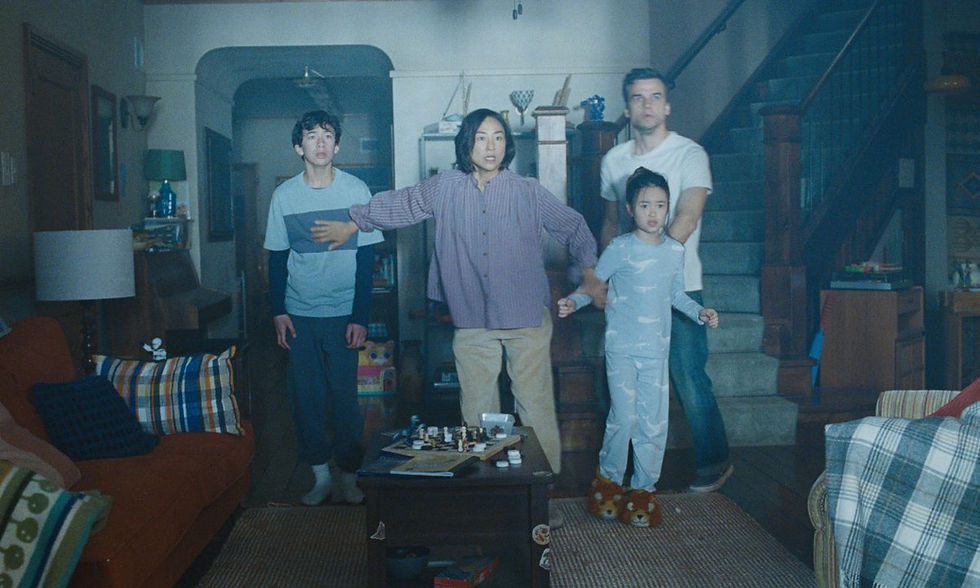
Até certo ponto, enquanto o filme se interessa pela dinâmica familiar, composta por mãe e pai – vividos pelos ótimos Greta Lee e Wagner Moura –, com um casal de filhos adolescentes, é capaz de prender a atenção do espectador, não porque existem conflitos ou questões mal resolvidas entre eles, mas justamente pelo ambiente saudável que compartilham, como uma grande alusão ao período da pandemia, experienciado por todos nós. Não à toa algumas passagens ilustradas pelo filme acabam soando verossímeis e oferecendo flashbacks das vidas pessoais do próprio público: pessoas se encontrando pelos vidros das janelas de suas casas, tentativas de comunicação por escrito e sinais (já que a internet deixara de funcionar), a busca por entretenimento dentro da residência, e o aprofundamento das relações, ocasionado pela situação de confinamento forçado.
Ainda que tudo isso funcione bem, não é suficiente para sustentar duas horas de filme, e é justamente quando A Última Casa começa a ruir (literalmente). Apesar da boa dinâmica construída pelo elenco – incluindo as duas gerações de filhos adolescentes, mais novos e posteriormente, mais velhos, cuja transição mal é sentida –, tudo o que circunda o elemento pós-apocalíptico, de ficção científica, é de uma imensa falta de originalidade. O roteiro de Matthew Robinson não é capaz de construir uma verdadeira situação que soe urgente ao espectador, e a todo tempo precisa tentar criar formas de fazer os personagens tentarem sair da residência. Acontece que, no decorrer dos eventos, tudo se torna excessivamente conveniente – tal como os recursos da família tornam-se escassos, a criatividade do roteirista também parece ser afetada.
Se inicialmente algumas propostas até funcionavam, especialmente no primeiro terço, dos instantes iniciais dessa nova realidade, aos poucos vai-se tornando bem pouco crível a sobrevivência, naqueles termos, ao longo de cinco anos. Os danos estruturais da casa apenas interessam quando o filme precisa deles, e todo o elemento de ficção científica se articula apenas na base do que é mais conveniente ao roteiro – um problema óbvio ou esperado só surge quando realmente precisa, e a explicação para não ter acontecido antes é sempre algo “místico”. Os personagens se adaptam muito facilmente a uma realidade que não é normal, abraçam a existência dos monstros e pouco se preocupam realmente com o que os prende no interior da residência. Em cinco anos, ninguém se preocupa com tentar quebrar as janelas por outras vezes, abrir a porta com ainda mais força, ou pelo menos observar a chuva, e tentar entender como suas gotas os mantém aprisionados nunca passa pela cabeça daqueles em cena.
Tamanha é a aceitação do aprisionamento que o longa apenas passa a abordar a necessidade de sair na reta final. A direção de Louis Leterrier trabalha muito bem com a direção de arte, e o trânsito pelo interior da casa, em suas transformações no decorrer dos anos – justamente o ponto alto do filme –, mas se atrapalha com facilidade quando precisa partir para sequências de ação em espaços estreitos. O excesso de planos da decupagem em simples diálogos familiares, e os muitos cortes nos momentos de combate comprometem uma proximidade mais genuína do espectador, que facilmente consegue se perder em cenas muito picotadas. A tensão quando os monstros estão em cena até funciona, mas de maneira tão burocrática quanto o próprio visual das criaturas, em segundo plano, passando por trás dos personagens, que se escondem em silêncio.
Na resolução, uma grande piada final para comprometer uma narrativa já muito pouco crível. Se cinco anos trancados em uma casa sem nem cogitar em sair já não fosse difícil de acreditar, em uma tentativa desesperada de soar poético e imaginativo, Robinson chega ao ápice do absurdo quando estabelece um diálogo não verbal entre os personagens e as criaturas. A montagem de recortes de passagens anteriores finge uma revelação que não existe de fato, apenas para justificar um final que não faz sentido com o pouco que o longa apresenta do mundo exterior até então. Em uma eterna reciclagem, A Última Casa é um filme de algoritmo que pouco pensa por conta própria – reaproveita ideias de tantos outros projetos, em um bolo dos mais genéricos, que se acha muito inteligente, e desperdiça um elenco engajado em propostas vazias. Uma pena ver Wagner Moura e Greta Lee interpretando um casal tão real em algo com tão pouco a propor.
Avaliação: ★★
A Última Casa (The Last House, 2026)
Direção: Louis Leterrier
Roteiro: Matthew Robinson
Gênero: Thriller, Ficção Científica, Terror
Origem: EUA, Reino Unido, França
Duração: 112 minutos (1h52)
Disponível: Netflix
Sinopse: Uma família trancada misteriosamente na própria casa precisa se unir para sobreviver à escassez de recursos e à força sombria que a mantém presa.
English review
Like a film generated by an algorithm gone wrong, The Last House recycles post-apocalyptic ideas into generic science fiction filled with implausible situations, underestimating its audience and wasting a talented cast.
Netflix, as a company, studio, and streaming service, is not foolish. It knows its customers, what they are looking for, what tends to be successful, and what has the potential to attract new subscribers - in short, it is fully aware of its algorithm. Over the years, it has become quite clear that post-apocalyptic films blending thriller elements with horror tend to work well - Bird Box (2018), Leave the World Behind (2023), and other successful titles have reinforced the formula over the years. So, naturally, putting a small ensemble of stars together in one of these films would certainly attract the audience's attention.
In this sense, The Last House does propose something somewhat interesting to the post-apocalyptic monster subgenre. Rather than simply having mysterious creatures invade the world, the characters are trapped inside their own homes - but not as a survival measure. They simply cannot open any doors or windows or break any glass, as there always seems to be some force, manifested through the incessant rain, preventing them from escaping.
To a certain extent, while the film is interested in the family dynamic, composed of a mother and father - played by the excellent Greta Lee and Wagner Moura - and their two teenage children, it manages to hold the audience's attention not because there are conflicts or unresolved issues between them, but precisely because of the healthy environment they share, serving as a major allusion to the period of the pandemic experienced by all of us. It is no coincidence that some of the situations depicted in the film feel remarkably relatable, offering flashbacks to the personal experiences of many viewers: people meeting one another through the windows of their homes, attempts to communicate through writing and gestures (since the internet had stopped working), the search for entertainment inside the house, and the deepening of relationships brought about by forced confinement.
Even though all of this works well, it is not enough to sustain a two-hour film, and this is precisely when The Last House begins to crumble - quite literally. Despite the strong dynamic established by the cast - including the two generations of teenage children, first younger and later older, whose transition is barely felt - everything surrounding the post-apocalyptic, science-fiction elements is astonishingly unoriginal. Matthew Robinson's screenplay is unable to create a truly urgent situation for the audience, constantly having to devise reasons for the characters to attempt to leave the house. As events unfold, however, everything becomes excessively convenient - just as the family's resources become scarce, the screenwriter's creativity seems to run out as well.
While some of the ideas initially work, particularly during the first third, when the characters are adjusting to this new reality, their survival under these circumstances gradually becomes increasingly difficult to believe over the course of five years. The structural damage to the house only matters when the film needs it to, and every science-fiction element operates according to whatever is most convenient for the screenplay - an obvious or expected problem only arises when it is needed, and the explanation for why it did not happen earlier is always something "mystical." The characters adapt far too easily to an abnormal reality, accept the existence of the monsters, and seem remarkably unconcerned about what is keeping them trapped inside the house. Over five years, no one seriously considers trying to break the windows again, forcing the doors open with greater strength, or even observing the rain to understand how its drops keep them imprisoned. None of this ever seems to cross the minds of the people on screen.
The extent of their acceptance of their imprisonment is such that the film only begins addressing the need to escape during its final stretch. Louis Leterrier's direction handles the production design very well, particularly in the way the house changes throughout the years - easily the film's strongest aspect - but struggles considerably whenever it needs to move into action sequences within confined spaces. The excessive number of cuts in otherwise simple family conversations, along with the many edits during combat sequences, compromise the audience's sense of genuine proximity to the characters, making it easy to lose track of what is happening in scenes that are excessively fragmented. The tension when the monsters appear does work to a certain extent, but in a manner as procedural as the creatures' own visual design, often relegated to the background as they move behind characters who hide in silence.
Then comes the resolution, complete with one final joke that compromises an already highly implausible narrative. If spending five years locked inside a house without even seriously considering escape was not already difficult enough to believe, Robinson reaches the height of absurdity in a desperate attempt to sound poetic and imaginative by establishing a non-verbal dialogue between the characters and the creatures. An edited montage of fragments from earlier scenes pretends to reveal something that is not actually there, merely to justify an ending that makes little sense given how little the film has shown us about the outside world up to that point. In an endless cycle of recycling, The Last House is an algorithmic film that barely thinks for itself - reusing ideas from countless other productions and blending them into one of the most generic concoctions imaginable, while believing itself to be far more intelligent than it actually is and wasting a committed cast on empty ideas. It is a shame to see Wagner Moura and Greta Lee portraying such a believable couple in a film with so little to offer.
★★


Comentários