

25º TRIBECA FILM FESTIVAL | Dante, de Hugo Ruiz (Idem, 2026)

A partir de referências “tarantinescas”, Hugo Ruiz faz de Dante um divertido thriller manipulativo, que mescla bom humor com mistério em narrativa imprevisível.

Existe um enorme abismo moral que separa autores que copiam outros, e autores que se inspiram em outros. Aqueles que copiam basicamente reproduzem elementos, passagens, ideias exploradas por terceiros, com pouco ou nada a propor a partir delas, utilizando-as como muletas para sua própria obra, muitas vezes sem identidade – eventualmente até de maneira velada, e outras, explicitamente, como quem não quer nada. Por outro lado, os que se inspiram utilizam desses elementos de semelhança para algo próprio, normalmente vistos como referencias e homenagens reconstruídas em torno de originalidade. Apesar da diferença abismal entre a cópia e a inspiração, sua identificação pode ficar em um complicado limiar, por vezes até pendendo entre um e outro.
O caso de Dante é claramente um exercício de inspiração no cinema de Quentin Tarantino, do qual Hugo Ruiz não esconde sua admiração desde os primeiros instantes, quando ironicamente dá início à sua narrativa com um carro capotando, e o personagem em seu interior saindo cambaleando. Toda a primeira metade do longa se passa concentrado em um único ambiente – o apartamento desde homem perseguido, que aguarda a chegada de um paramédico para socorrê-lo de ferimentos graves, enquanto sabe, também, que será visitado por aqueles que procuram o misterioso item que possui consigo.
O que é este objeto? Ninguém sabe – tanto os personagens quanto o próprio espectador, senão por algo brilhante, tal como a maleta de Pulp Fiction, um dos mais clássicos exemplos de “McGuffin” do cinema. A violência estilizada, ao som de canções melodramáticas, a vestimenta amarela com listras de um dos personagens, e outros detalhes no desenrolar da trama puxam à memória referências à Tarantino, tal como a fotografia esverdeada com traços neons lembra bastante a atmosfera do primeiro longa da franquia John Wick, que compartilha com o presente de seu eixo temático, voltado ao mundo do crime.
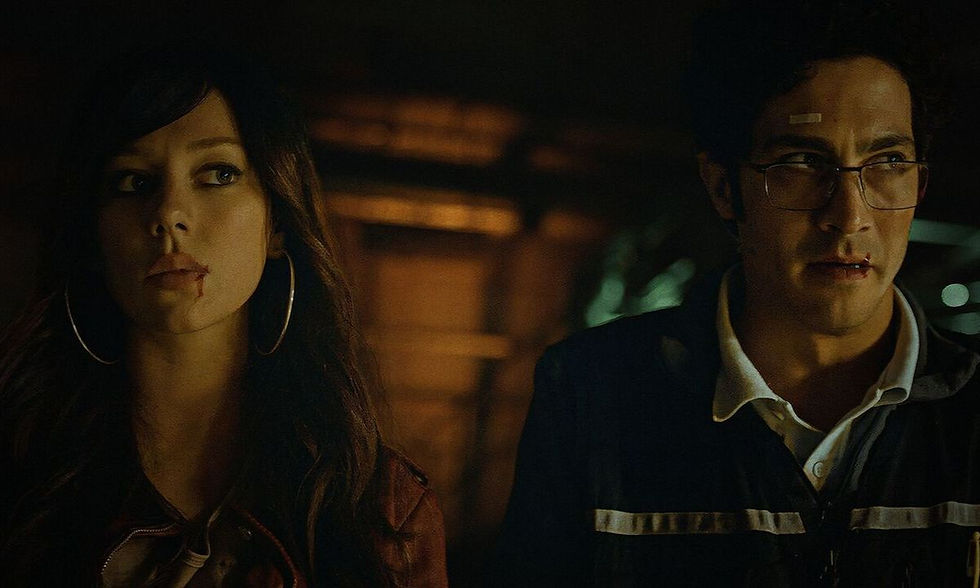
No entanto, apesar das inúmeras lembranças a outros longas – como igualmente dos recentes The Outfit (2022) e Ambulance (2022), ainda que não intencionalmente, acredito –, Dante também oferece para si algo para muito além de apenas referências. Há todo um cuidado por parte de Hugo Ruiz na maneira como constrói as relações que dominam a cena, em especial entre os personagens vividos por Chino Darín, Ester Expósito e Vicente Romero, composta por uma dinâmica de desespero e insegurança que atinge os dois homens, em polos opostos, e encontra certo equilíbrio na figura feminina, que segura as pontas de ambos os lados, como o elo de sucesso para o cumprimento do objetivo que detém diante de si.
A montagem nunca deixa essa atmosfera de tensão esfriar, diante do perigo que circunda o ambiente, juntamente com o mistério do objeto que procuram, ao passo que a câmera se encontra sempre presente no desenrolar da ação, e cada vez mais próxima dos personagens na medida em que migram do ambiente do apartamento para a clausura da ambulância.
Da mesma maneira, o texto busca não definir seus personagens tão somente pelas funções que cumprem na narrativa, e a imagem externa que apresentam ao mundo através dos meios em que cresceram e atuam, como mocinhos ou bandidos. Ruiz define muito bem seu universo através de uma frase dita por um de seus personagens, em determinado instante: “os bons nem sempre são tão bons, e os maus nem sempre tão maus”. O aspecto de metalinguagem aprofunda em parte essa relação dúbia sobre a moral dos retratados, ainda que uma explicação excessiva desse elemento, na reta final, se torne um dos pontos de maior fragilidade do longa, justamente com um monólogo longo e detalhado.
Surpreende a forma como existe um ambiente de manipulação implícito no decorrer da obra, disposto em entrelinhas de diálogos bem articulados que se amarram de vez com o rolar dos créditos finais, com vistas a uma ressignificação completa de boa parte da narrativa. Dante manipula seus personagens, e consequentemente seu espectador, mas de maneira honesta. Nunca faltam elementos em cena ou em tela para refletir sobre o que acontece, e a reviravolta caminha lentamente de encontro ao público, sem soar forçada – estava sempre tudo ali, como um quebra-cabeças útil para ser montado. É uma ótima e divertida surpresa desta edição de Tribeca.
Avaliação: 4/5
Dante (Idem, 2026)
Direção: Hugo Ruiz
Roteiro: Hugo Ruiz
Gênero: Thriller
Origem: Espanha
Duração: 94 minutos (1h34)
Exibido no 25º Tribeca Film Festival (Escape From Tribeca)
Sinopse: Ao atender a uma chamada de emergência, um jovem paramédico acaba, sem querer, lançado no meio de uma guerra entre criminosos, desencadeando uma sequência cada vez mais intensa de reviravoltas brutais ao longo de uma noite insana.
English review
Drawing from distinctly Tarantino-esque influences, Hugo Ruiz turns Dante into an entertaining and manipulative thriller, blending humor and mystery within an unpredictable narrative.
There is a vast moral divide between artists who copy others and those who draw inspiration from them. Those who copy merely reproduce elements, scenes, and ideas explored by others, with little or nothing to add of their own, using them as crutches for their work, often without any real identity - sometimes subtly, and other times quite openly, as though nothing were amiss. Those who are inspired, on the other hand, use similar elements to create something distinctly their own, transforming them into references and homages rebuilt around originality. Despite the enormous difference between copying and inspiration, distinguishing one from the other can be a complicated matter, often existing in a gray area between the two.
Dante is clearly an exercise in inspiration drawn from the cinema of Quentin Tarantino, a filmmaker Hugo Ruiz does not attempt to hide his admiration for from the very first moments, when he ironically opens the narrative with a car flipping over and the man inside stumbling out of the wreckage. The entire first half of the film unfolds within a single location - the apartment of this pursued man, who awaits the arrival of a paramedic to treat his severe injuries while also knowing that others will soon come searching for the mysterious object in his possession.
What exactly is this object? No one knows - neither the characters nor the audience - beyond the fact that it glows, much like the briefcase in Pulp Fiction, one of cinema's most iconic examples of a MacGuffin. The stylized violence set to melodramatic songs, the yellow striped outfit worn by one of the characters, and various other details throughout the story evoke Tarantino's work, while the green-tinted, neon-infused cinematography strongly recalls the atmosphere of the first John Wick film, which shares with Dante a thematic focus on the criminal underworld.
However, despite the many reminders of other films - including, perhaps unintentionally, The Outfit (2022) and Ambulance (2022) - Dante offers far more than a collection of references. Hugo Ruiz demonstrates considerable care in the way he constructs the relationships that dominate the screen, particularly among the characters played by Chino Darín, Ester Expósito, and Vicente Romero. Their dynamic is shaped by desperation and insecurity affecting the two men from opposite sides of the conflict, while the female character serves as a stabilizing force, holding both ends together and acting as the crucial link for the objective she seeks to achieve.
The editing never allows the atmosphere of tension to cool, as danger constantly surrounds the characters alongside the mystery of the object everyone seeks. At the same time, the camera remains deeply involved in the unfolding action, moving ever closer to the characters as the story transitions from the apartment to the claustrophobic confines of an ambulance.
Likewise, the screenplay avoids defining its characters solely through the functions they perform within the narrative or the external images they project to the world through the environments in which they were raised and operate, whether as heroes or villains. Ruiz encapsulates his universe perfectly through a line spoken by one of the characters: "the good are not always so good, and the bad are not always so bad." The film's metatextual dimension further deepens this ambiguous relationship with morality, although an overly detailed explanation of this element in the final stretch becomes one of the feature's greatest weaknesses, particularly through a lengthy and highly explicit monologue.
What proves most surprising is the atmosphere of manipulation woven throughout the film, embedded within carefully crafted dialogues that ultimately come together as the end credits roll, prompting a complete reevaluation of much of the narrative. Dante manipulates its characters, and consequently its audience, but it does so fairly. The film never withholds essential pieces of information needed to reflect upon what is happening, and its twist steadily approaches the viewer without ever feeling forced - everything was always there, waiting to be assembled like a puzzle. It is one of the great and most entertaining surprises of this year's Tribeca edition.
Dante premiered at 25th Tribeca Film Festival (Escape From Tribeca section).



Comentários