

30º FANTASIA FILM FESTIVAL | The Parking Spot, de Louis Godbout (La Place, 2026)

A partir de uma situação corriqueira, The Parking Spot abandona o thiller instigante ao levar-se muito a sério em uma narrativa fraca repleta de simbolismos bíblicos ocos e uma ideia de predestinação.
A proposta inicial de The Parking Spot ilustra, de maneira muito prática, um momento canônico na vida de todo e qualquer cidadão de uma cidade grande. Em tempos nos quais a população mundial aumenta significativamente, e as grandes cidades se tornam ainda maiores, mais superpopulosas, com mais carros na rua, trânsito, engarrafamentos, uma consequência óbvia (dentre muitas, de outras ordens socioambientais) é a falta de vagas para estacionar. Seja no meio-fio na via pública, em um shopping center no final de semana, a “guerra” por uma vaga é algo que todos já passaram – se não como motorista, então como passageiro -, e a depender da dinâmica entre os envolvidos, reflete muito do ser humano, como uma criatura egoísta.
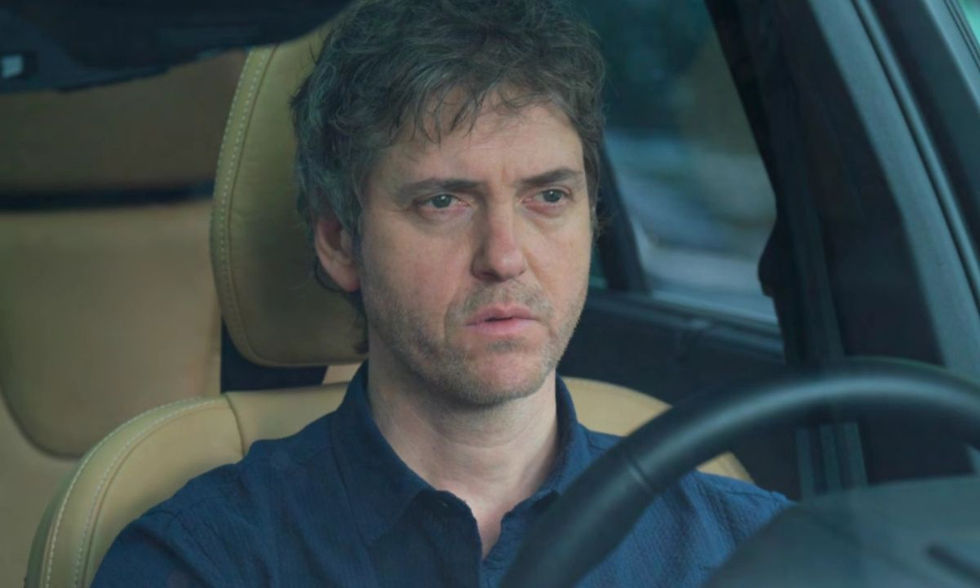
A partir de uma situação como tal, o filme de Louis Godbout aproveita para construir tensão quando dois carros começam a disputar por uma vaga para estacionar em uma zona residencial de uma grande cidade canadense. Antes do evento central se iniciar, exploram-se as condições pelas quais vivem seus personagens principais – o casal Jonathan e Brigitte (vividos por Maxim Gaudette e Christine Beaulieu), que lidam com um relacionamento frágil, não exatamente em sua melhor fase, vez que Joe (como é chamado) enfrenta um quadro de depressão nunca expressamente mencionado com tais palavras, mas bastante claro para ambos, como um elefante na sala.
Aos poucos, os motivos do descompasso se revelam perante o espectador – da tentativa de gravidez que nunca acontece; o medo do envelhecimento; e uma pressão interna, social, para ambos formarem uma família, sobretudo quando as demais pessoas ao seu redor já tem filhos pequenos, realizando um sonho que ainda não conquistaram. Há sensibilidade por parte do diretor na maneira como articula tais elementos, ao passo que a situação envolvendo a vaga para estacionar nos leva a enxergar a maneira pela qual buscam solucionar o conflito.
No outro carro, entretanto, o motorista é um sujeito estranho. Quieto, excessivamente calmo, porém de ar ameaçador, aumenta a tensão ao jogar com o psicológico dos protagonistas através de provocações, físicas e visuais. Soa como uma pessoa calculista, sempre subestimada pelo carro antigo e malcuidado que dirige. Nesse sentido, leva-se a cabo a máxima de que, no trânsito, nunca se sabe quem está na condução do outro veículo.
O cineasta decupa muito bem esse impasse, e leva para a imagem o estresse do protagonista na disputa pela vaga, especialmente quando estabelece calmamente cada movimento e o ambiente ao redor, tanto do lado de dentro quanto de fora do veículo. Por vezes, torna-se cômico, ao mesmo tempo que assusta pensar no contexto geral e nas possibilidades do que pode suceder aquele cenário.
A questão é que o filme não sabe exatamente o que pretende comunicar com tudo isso que constrói à frente do espectador, e tampouco escalar a situação de um jeito divertido. A partir de um elemento de fantasia, que circunda o homem do outro carro, Godbout passa a dizer que nenhum dos eventos no decorrer da narrativa se deram por mera coincidência do destino. Surge uma ideia de predestinação, uma materialização de um ser que muito além de apenas um sujeito conduzindo um veículo. Superado o impasse, todos aqueles nele envolvidos estiveram no local por uma razão específica, revelada com o destino de determinados personagens.
É justamente quando o longa abandona seu aspecto de racionalidade para construir simbologias através da imagem, com alusões bíblicas que pouco fazem sentido diante do contexto – não da briga pela vaga, mas da própria narrativa e os pontos para os quais caminha. A ideia de explorar o egoísmo do ser humano é escanteada para voltar-se a essas alegorias religiosas vazias, de simbolismos ocos, que desviam justamente daquilo que fazia The Parking Spot intrigante.
As resoluções de Louis Godbout não engrenam e nem empolgam o espectador na segunda metade do longa, especialmente na reta final. Admiro a coragem do realizador em alterar completamente o caminho esperado, buscando por surpresas, que, no entanto, destroem quase que por completo toda a boa condução da proposta narrativa, ao optar por uma veia místico-religiosa vazia do que por algo verdadeiramente humano. Talvez a ideia desde o começo fosse por essa abordagem reflexiva de alusões religiosas, que não combina com o ritmo empregado pela obra em seus melhores momentos, perdendo o impacto nesse desvio, sem perceber que já o tinha em mãos.
Avaliação: ★★
The Parking Spot (La Place, 2026)
Direção: Louis Godbout
Roteiro: Louis Godbout
Gênero: Drama, Thriller
Origem: Canadá
Duração: 84 minutos (1h24)
Exibido no 30º Fantasia Film Festival
Sinopse: Uma discussão por causa de uma vaga de estacionamento arrasta um casal para um confronto inesperado com um estranho.
English review
Starting from an everyday situation, The Parking Spot abandons its intriguing thriller premise by taking itself far too seriously, resulting in a weak narrative filled with hollow biblical symbolism and an unconvincing notion of predestination.

The initial premise of The Parking Spot illustrates, in a very practical way, a canonical moment in the life of anyone living in a major city. At a time when the world's population continues to grow significantly and large urban centers become even bigger, more densely populated, with more cars on the streets, heavier traffic, and endless congestion, one obvious consequence (among many others of a socio-environmental nature) is the shortage of parking spaces. Whether along the curb on a public street or at a shopping mall on a weekend, the "battle" over a parking spot is something everyone has experienced - if not as a driver, then certainly as a passenger - and, depending on the dynamics between those involved, it reveals a great deal about human beings as inherently selfish creatures.
From such a familiar situation, Louis Godbout builds tension as two cars begin competing for a single parking space in a residential neighborhood of a large Canadian city. Before the central conflict begins, the film explores the circumstances surrounding its main characters - the couple Jonathan and Brigitte (played by Maxim Gaudette and Christine Beaulieu), whose relationship is fragile and clearly going through a difficult period, as Joe (as he is called) struggles with depression. Although never explicitly identified by that word, his condition is evident to both of them, lingering like the proverbial elephant in the room.
Gradually, the reasons behind their growing disconnect are revealed to the audience - their unsuccessful attempts to conceive a child, their fear of aging, and the internal and societal pressure to start a family, especially as those around them already have young children, fulfilling a dream they themselves have yet to achieve. Godbout approaches these elements with sensitivity, while the parking dispute allows us to observe the way in which they attempt to resolve conflict.
The driver of the other vehicle, however, is a peculiar man. Quiet, unnervingly calm, yet carrying a threatening presence, he heightens the tension by manipulating the protagonists psychologically through both physical and visual provocation. He comes across as a calculating individual, constantly underestimated because of the old, poorly maintained car he drives. In this sense, the film embraces the familiar truth that, in traffic, you never know who is behind the wheel of the other vehicle.
The filmmaker stages this confrontation exceptionally well, translating the protagonist's mounting stress into the visual language of the film, particularly through the careful choreography of every movement and the surrounding environment, both inside and outside the car. At times, the situation even becomes humorous, while simultaneously remaining unsettling when considering the broader context and the possibilities of what might follow.
The problem is that the film never seems to know exactly what it wants to communicate through everything it builds before the audience, nor does it know how to escalate the situation in a consistently engaging way. Through a fantasy element surrounding the mysterious man in the other car, Godbout begins suggesting that none of the events unfolding throughout the story occurred by mere coincidence. A notion of predestination emerges, embodied in a figure who is far more than simply a man driving a vehicle. Once the dispute has ended, it becomes clear that everyone involved was brought to that place for a specific reason, ultimately revealed through the fate of certain characters.
It is precisely at this point that the film abandons its sense of rationality in favor of constructing symbolic imagery filled with biblical allusions that make little sense within the context - not of the parking dispute itself, but of the narrative as a whole and the direction in which it ultimately moves. The idea of exploring human selfishness is pushed aside in favor of these empty religious allegories and hollow symbolism, diverting attention from precisely what made The Parking Spot so compelling in the first place.
Louis Godbout's resolutions fail to gain momentum or captivate the audience throughout the film's second half, especially in its closing stretch. I admire the filmmaker's willingness to take the story in a completely unexpected direction in search of genuine surprise. However, that choice ultimately undermines almost everything that made the narrative so engaging, favoring an empty mystical-religious approach over something genuinely human. Perhaps this reflective framework of religious allusions was the intention from the very beginning, yet it clashes with the rhythm the film establishes during its strongest moments, diminishing its impact by abandoning the very strengths it already possessed.
★★
The Parking Spot was screened at 30th Fantasia Film Festival.


Comentários