

48º CINEMA DU RÉEL | I Crossed the Desert with a Gun in Hand, de Laurence Garret (Idem, 2026)

A história de Daniel Torres poderia render um documentário poderoso, mas pelas mãos de Laurence Garret pouco se conta ou mostra, para além da sinopse e conversas aleatórias, com uma câmera desinteressada na luta do personagem retratado.
Creio que seja a terceira vez, em menos de um ano, que conto sobre este conselho da professora Michele, quando, no meu segundo período da faculdade de Direito, ela falava sobre pesquisa acadêmica. Com a ressalva das naturais diferenças entre fazer uma pesquisa acadêmica no campo do Direito, e um longa-metragem documental, algo prevalece, quase como uma constante: a delimitação temática. Um trabalho, seja cinematográfico, acadêmico-jurídico ou mesmo a crítica de um filme, que não delimita tema, acaba, muitas vezes, falando sobre tudo e nada ao mesmo tempo. Às vezes, ainda que a falta dessa delimitação possa prejudicar a obra, talvez até se justifique nas dificuldades encontradas ao longo de sua produção ou na própria tentativa de experimentar com a linguagem do cinema, cujo tiro pode acabar saindo pela culatra com um filme disperso e, por vezes, incompreensível.
O documentário I Crossed the Desert with a Gun in Hand tinha a faca e o queijo na mão em uma série de circunstâncias, seja no personagem que busca retratar, em sua história de vida, batalhas travadas contra o sistema, e sobretudo, a pertinência temática, quando se tem em vista o momento em que os Estados Unidos se encontram, deportando imigrantes ilegais em massa. A sinopse é um prato cheio para o debate do caso de Daniel Torres, de origem mexicana, imigrante ilegal criado no país, veterano do exército norte-americano, tendo inclusive servido no Iraque, e posteriormente deportado ao perder seus documentos, depois de ter a carteira furtada. Sua luta pela cidadania o levou aos Tribunais, que reconheceram seu direito legítimo, e o tornou um ativista responsável por auxiliar veteranos que enfrentam a mesma questão. No entanto, o filme parece pouco interessado em explorar, ou mesmo contar, tudo isso.
O personagem de Daniel se torna uma figura com voz importante em tempos nos quais muito se debate a atuação da ICE (polícia de imigração), seu exercício e limites, razoáveis ou não. Como ele sobreviveu ilegalmente pelos Estados Unidos, ingressou no exército, serviu em guerras e venceu o próprio sistema que o deportou são questões que Laurence Garret nunca se aprofunda. No máximo o ouvimos narrar um episódio ou outro de sua vida pessoal, das origens familiares, da cultura mexicana internalizada na formação familiar, e até ouvimos a visão de sua irmã sobre ele. Mas fica por isso mesmo.
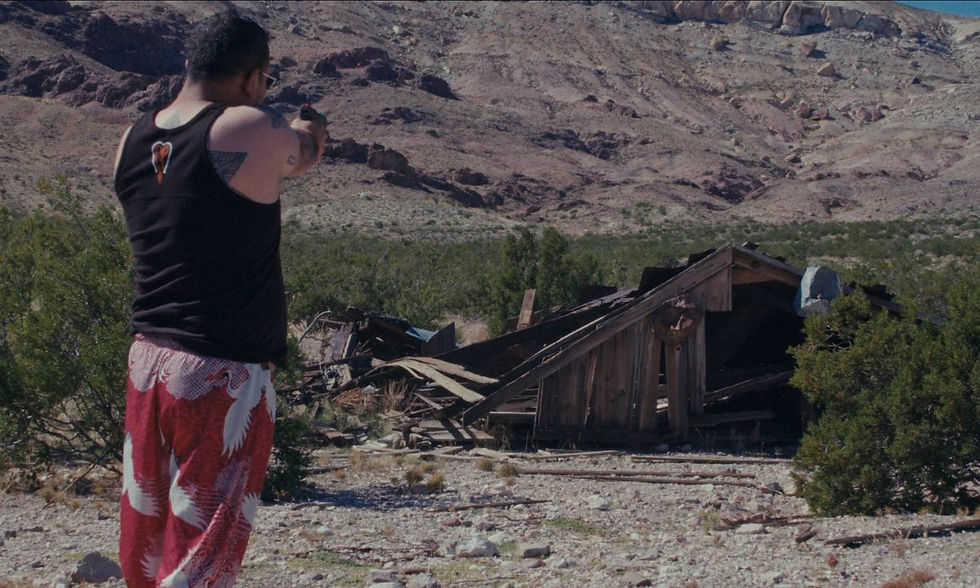
Tudo o que sabemos sobre Daniel Torres, então, se resume ao que está disposto na sinopse do filme, e o que comentei acerca nos parágrafos anteriores. O filme apenas relata pelo que ele passou, mas nunca se dedica a explorar o processo – como aconteceu, seus sentimentos, o peso que teve na vida do biografado. Durante quase oitenta minutos, apenas viajamos com Torres pelos Estados Unidos e acompanhamos a filmagens feitas pela diretora de conversas travadas com outras pessoas pelo caminho – de amigos à desconhecidos.
Existe uma posição naturalista na maneira como Garret mantém-se inerte enquanto cineasta, e apenas registra imagens e momentos, sem interferir diretamente no que acontece em frente à sua câmera – tanto que nunca se posiciona ou se materializa perante a imagem construída, como se não estivesse lá. Mas a pergunta que fica é: o que ela deseja transmitir com isso, e qual seria a razão de escolher uma figura como Daniel Torres, se pouco há interesse em ouvir ou registrar aquilo que passara? De fato, sua figura é um verdadeiro chamariz à obra – e não à toa tanto o título quanto a sinopse escrita são interessantes –, no entanto soa como uma mentira tendo em vista o projeto final.
A montagem desordenada nos impede saber exatamente quanto tempo se passa entre as filmagens, qual seria o destino da viagem, e tampouco se preocupa em dizer quem são as pessoas com quem Torres conversa. Até existe uma tentativa de gerar um momento emotivo, ao tratar da avó, mas que igualmente se mostra deslocado dentro de um filme que filma muito, mas não conta nada.
Assim, ainda que muito legal a escolha de apresentação da figura de Daniel Torres ao público, I Crossed the Desert with a Gun in Hand nunca se preocupa em explorá-lo de verdade, ou sequer ouvir o que ele tem a dizer dentro de sua área central de atuação enquanto militante pelos direitos à cidadania de estrangeiros veteranos do exército norte-americano. O letreiro final, inclusive, é mais um reforço da ineficácia da obra, ao revelar a intensificação dessa luta nos últimos anos, e frente aos últimos governos do país, sem que o filme tenha, em momento algum anteriormente, mencionado efetivamente como esta batalha acontece. No fim, é uma ótima ideia, que poderia render frutos se houvesse alguma organização nessa abordagem absolutamente confusa e sem nexo, maçante ao espectador, e uma baita perda de oportunidade por parte da diretora.
Avaliação: 1/5
I Crossed the Desert with a Gun in Hand (Une arme à la main, j’ai traversé le desert, 2026)
Direção: Laurence Garret
Gênero: Documentário
Origem: França
Duração: 78 minutos (1h18)
Exibido no 48º Cinema du Réel (Competitiva)
Sinopse: Daniel Torres se alistou no Corpo de Fuzileiros Navais dos Estados Unidos antes de ser preso e deportado para Tijuana, no México, ao retornar da guerra no Iraque. Após vencer uma ação judicial contra o governo dos Estados Unidos, ele agora tenta ajudar aqueles que, como ele, foram banidos de um país pelo qual arriscaram suas vidas.
English review
The story of Daniel Torres could have made for a powerful documentary, but in the hands of Laurence Garret, very little is actually told or shown beyond the synopsis and scattered conversations, with a camera seemingly uninterested in the struggle of the portrayed subject.
I believe this is the third time, in less than a year, that I bring up this piece of advice from Professor Michele, who, during my second semester in law school, spoke about academic research. Despite the natural differences between conducting academic research in the field of Law and making a feature-length documentary, something persists almost as a constant: thematic delimitation. A work—be it cinematic, academic-legal, or even a film review—that fails to define its scope often ends up speaking about everything and nothing at the same time. Sometimes, although this lack of focus may harm the work, it might be justified by production difficulties or by an attempt to experiment with cinematic language—an attempt that can ultimately backfire, resulting in a scattered and occasionally incomprehensible film.
The documentary I Crossed the Desert with a Gun in Hand had everything going for it under a number of circumstances: the character it seeks to portray, his life story, his battles against the system, and, above all, its thematic relevance, particularly in light of the current moment in the United States, with mass deportations of undocumented immigrants. The synopsis alone offers fertile ground for discussing Daniel Torres’s case: of Mexican origin, an undocumented immigrant raised in the U.S., a veteran of the American army who even served in Iraq, and later deported after losing his documents when his wallet was stolen. His fight for citizenship led him to the courts, which ultimately recognized his legitimate right, turning him into an activist who helps other veterans facing similar situations. However, the film shows little interest in exploring—or even properly telling—any of this.
Daniel becomes a figure with an important voice at a time when much is being debated about the role of ICE (Immigration and Customs Enforcement), its practices, and its limits. How he survived as an undocumented immigrant in the U.S., enlisted in the military, served in wars, and ultimately overcame the very system that deported him are questions that Garret never meaningfully explores. At most, we hear him recount isolated episodes from his personal life—his family background, the Mexican culture embedded in his upbringing—and we briefly hear his sister’s perspective on him. But it stops there.
Everything we learn about Daniel Torres, then, is essentially what is already laid out in the film’s synopsis and what has been mentioned in the paragraphs above. The film merely states what happened to him but never commits to exploring the process—how it unfolded, his emotions, or the weight it carried in his life. For nearly eighty minutes, we simply travel with Torres across the United States, watching footage captured by the director of conversations with various people along the way, from friends to strangers.
There is a naturalistic stance in the way Garret remains inert as a filmmaker, merely recording images and moments without directly interfering in what unfolds before her camera—so much so that she never positions or materializes herself within the constructed image, as if she were not present at all. But the question remains: what does she intend to convey with this approach, and why choose a figure like Daniel Torres if there is so little interest in hearing or documenting what he has gone through? Indeed, his figure serves as a strong hook for the film - and it is no coincidence that both the title and the written synopsis are compelling. Yet, in light of the final product, it all feels misleading.
The disordered editing prevents us from understanding how much time passes between the filmed moments, what the destination of the journey is, or even who the people are with whom Torres interacts. There is an attempt to create an emotional moment when addressing his grandmother, but it too feels out of place within a film that captures a great deal yet tells very little.
Thus, although the presentation of Daniel Torres to the audience is, in itself, a strong and promising choice, I Crossed the Desert with a Gun in Hand never truly commits to exploring him, nor even to listening to what he has to say within his central role as an activist for the citizenship rights of foreign veterans of the U.S. military. The final title card further reinforces the film’s ineffectiveness, mentioning the intensification of this struggle in recent years and under recent administrations, without the film ever having actually shown how this battle unfolds. In the end, it is a great idea that could have borne fruit, had there been any organization to this thoroughly confused and disjointed approach—ultimately tedious for the viewer and a significant missed opportunity on the part of the director.
I Crossed the Desert With a Gun in Hand had its world premiere at 48th Cinema du Réel Film Festival.


Comentários