

CRÍTICA | Dia D, de Steven Spielberg (Disclosure Day, 2026)
- Henrique Debski

- há 4 horas
- 9 min de leitura
Steven Spielberg olha para o passado com saudosismo, revive uma atmosfera de conspiração governamental noventista, e usa dos alienígenas, em Dia D, para falar sobre a humanidade.

Tem dias em que acordo e sinto saudades de assistir a um blockbuster original no cinema. Em tempos em que a criatividade está em falta, o excesso de sequências, spin-offs, reboots, refilmagens vêm se tornando cansativas, quando estúdios milionários, desesperados por fazer mais dinheiro, tem abandonado a originalidade em prol de reciclagens infinitas, que apenas giram entorno do próprio eixo, dos mesmos personagens e das mesmas histórias já contadas inúmeras vezes. É um problema que não atinge apenas o cinema, mas também o universo dos games, igualmente contaminado por esse excesso de obras idênticas, com cada vez menos identidade – é algo que inclusive conversei recentemente com um amigo, quando comentávamos dos anúncios de lançamentos do Summer Game Fest 2026.
Ainda que este ano já tenhamos sido agraciados com alguns filmes de altíssimo orçamento que miram em histórias e ideias originais, mesmo que adaptadas (como A Noiva! e Devoradores de Estrelas), filmes como Dia D me reacendem uma fagulha de esperança ainda maior de que nem tudo atualmente são reciclagens, e que a originalidade ainda está viva no coração de realizadores, como o veterano Steven Spielberg, o pai dos blockbusters. Retornado a temática dos alienígenas, muito cara ao cineasta e a sua filmografia, e com ar de saudosismo, o objetivo da vez não é investigar o que vem dos céus, mas como a humanidade reagiria e se comportaria com a descoberta da existência dessa força “superior”.
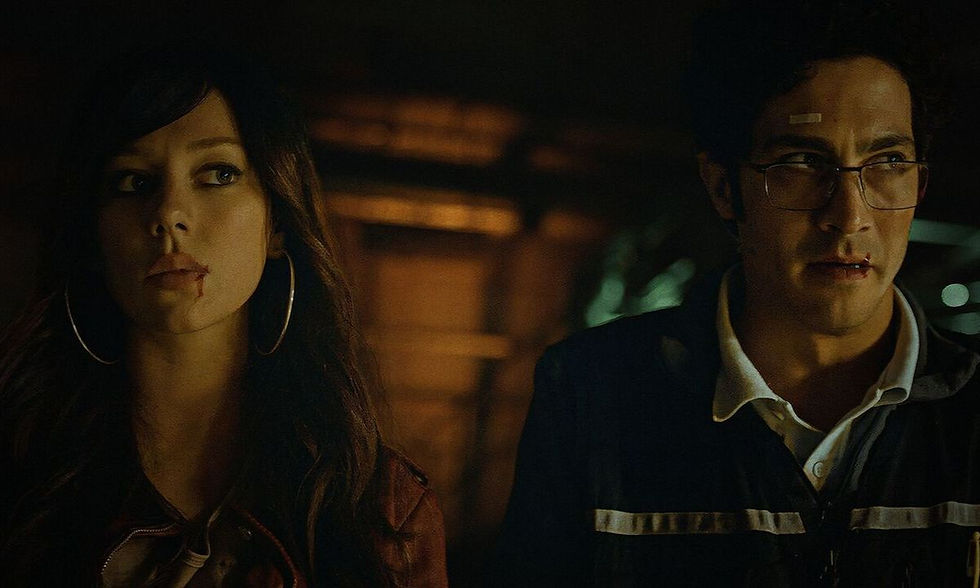
Em uma atmosfera de conspiração governamental que nos remete aos anos 1990, e uma influência direta da série Arquivo X, Spielberg não oferece introduções detalhadas na sequência inicial. Sem perder tempo, já coloca o protagonista de Josh O’Connor para enfrentar uma ameaça, enquanto perseguido por homens de terno que exigem a mochila que carrega consigo em troca da liberdade de sua namorada. A tensão cresce quando demonstra estar em posse de um artefato não humano, que emite uma luz brilhante e que todos aparentam temer. Enquanto, cenas depois, conversa com sua amada, depois de uma fuga bem-sucedida, e revelam segredos pessoais um para o outro – como uma prova de que não necessariamente se conheciam de verdade, apesar de estarem juntos há um ano –, o diretor demonstra, através do protagonista, o trunfo de seu cinema: o mostrar, e não apenas o falar, quando abre o computador, e apresenta vídeos que comprovam a existência de alienígenas e segredos velados até mesmo do alto escalão do próprio Estado.
Ao mesmo tempo, constrói um cenário parecido, em ambiente completamente diverso. Se Daniel, vivido por O’Connor, conhece, ao menos em parte, a conspiração na qual se encontra envolvido, Margaret, vivida por Emily Blunt – a grande atuação do filme, e mais uma de sua carreira –, envolve-se sem nem saber como ou o porquê, seguindo o fluxo da própria intuição. São dois personagens envolvidos e que se comunicam ao longo de praticamente toda a narrativa, porém com pouquíssimo contato pessoal em sua maior parte. No entanto, existe uma enorme naturalidade na maneira como encontram-se conectados, mesmo sem se conhecer. É fruto não somente da narrativa, bem escrita por Spielberg em parceria com seu amigo de longa data, David Koepp, mas pela montagem de Sarah Broshar, que intercala os dois arcos fornecendo, ao espectador, as respostas aos mistérios levantados por um a partir do outro.
Quando ambos se encontram, em frente à câmera, sente-se uma energia de como se o mesmo já houvesse ocorrido anteriormente, durante todos esses momentos, algo que se dá muito, também, em razão das próprias atuações, com ambos os intérpretes muito confortáveis, tanto com seus personagens quando em trabalharem juntos.
Na mesma medida, o antagonismo assumido por Colin Firth, e o apoio logístico aos protagonistas, por parte de Colman Domingo, ambos igualmente à distância, e em polos opostos, soam convincentes pela maneira como Spielberg articula suas participações em meio à conspiração, com o uso de um artefato alienígena, que conecta o primeiro a seus alvos quando precisa de informações; e os celulares descartáveis no caso do segundo, reforçando a clandestinidade das comunicações, e o cuidado para não serem descobertos. A ausência de uma presença estatal direta no mistério, assumido por uma ONG que atua à frente da ocultação de provas alienígenas, evita levar o longa para um lado equivocado, ou desviar a atenção de uma parcela de público conspiracionista da verdadeira discussão a que se propõe.
Não é a toa que o personagem de Colin Firth, humanizado no decorrer da trama, a partir da exploração, ainda que superficial, de suas fragilidades pessoais, se apresenta como um antagonista aos protagonistas, e não necessariamente como um vilão, ainda que outros ao seu redor, no uso da força letal, possam ser vistos de tal forma, mas com certo ar de inferioridade. A intenção é justamente entregar a possibilidade de vilania nas mãos da humanidade, para trabalhar a maneira como receberiam a notícia de existência de extraterrestres.
Portanto, debate-se muito da influência religiosa na compreensão humana, e nas maneiras como a descoberta da existência de vida fora da Terra poderia abalar as bases do presente mundo globalizado. A religião, como meio de controle social, seria desacreditada com a contraprova de que os seres humanos não são as únicas vidas inteligentes, e nem estão ao centro do universo (o detalhe da personagem de Eve Hewson apertando a cruz com as mãos é muito significativa, neste cenário)? Seriam os extraterrestres uma ameaça? Sua chegada e integração ao planeta, em uma completa transformação das bases sociais, promoveria estabilidade ao mundo, ou o afundaria de uma vez por todas em meio ao caos?
Spielberg, então, não intende a responder essas perguntas, mas tão somente jogá-las à mente do público a partir da sugestão, e como pontos de reflexão sobre algo que um dia pode acontecer. A partir de Colin Firth e Colman Domingo, com O’Connor e Blunt como agentes de campo, nos oferece uma alegoria, como se a ocorrência dessa revelação (a que o título original de refere) levasse a sociedade em uma divisão, entre aqueles que acreditam e enxergam essa integração humanidade-alienígenas como algo positivo e possivelmente benéfico, e outros com a desconfiança de uma possível invasão futura. Tudo isso em um thriller de mistério e conspiração com elementos que nos remetem a alguns dos melhores momentos do cinema noventista, e sob a direção de um cineasta que busca mostrar tudo aquilo que conta, num filme que usa da imagem como a força motriz de uma narrativa poderosa, cujos alienígenas são apenas uma desculpa para falar sobre a humanidade.
Avaliação: 5/5
Dia D (Disclosure Day, 2026)
Direção: Steven Spielberg
Roteiro: David Koepp e Steven Spielberg
Gênero: Thriller, Drama, Aventura
Origem: EUA, Canadá, Nova Zelândia, Japão
Duração: 145 minutos (2h25)
Disponível: Cinemas
Sinopse: O mundo entra em colapso quando uma meteorologista, em plena transmissão ao vivo, é dominada por uma força invisível, perdendo a fala e emitindo sons perturbadores. Enquanto fenômenos inexplicáveis e sinais de controle mental em massa se espalham, um informante tenta expor segredos governamentais guardados por décadas.
English review
Steven Spielberg looks to the past with nostalgia, revives the atmosphere of 1990s government conspiracies, and uses aliens in Disclosure Day to talk about humanity.
There are days when I wake up and miss watching an original blockbuster in theaters. In a time when creativity often feels in short supply, the endless wave of sequels, spin-offs, reboots, and remakes has become exhausting, as major studios, desperate to make more money, have abandoned originality in favor of infinite recycling, endlessly revolving around the same characters and stories that have already been told countless times. It is a problem that affects not only cinema but also the gaming industry, equally contaminated by an excess of nearly identical works with increasingly little identity of their own - something I was recently discussing with a friend while talking about the announcements from Summer Game Fest 2026.
Although this year has already blessed us with a few high-budget films aiming for original stories and ideas, even when adapted (such as The Bride! and Project Hail Mary), films like Disclosure Day rekindle an even greater spark of hope that not everything today is recycled material, and that originality is still alive in the hearts of filmmakers such as the veteran Steven Spielberg, the father of the blockbuster. Returning to the theme of aliens, so dear to both the filmmaker and his body of work, and embracing a nostalgic tone, his objective this time is not to investigate what comes from the skies, but rather how humanity would react and behave upon discovering the existence of this "superior" force.
Within an atmosphere of government conspiracy that recalls the 1990s, and under the direct influence of The X-Files, Spielberg offers no lengthy introductions in the opening sequence. Without wasting time, he places Josh O'Connor's protagonist in direct confrontation with a threat, while he is pursued by men in suits demanding the backpack he carries in exchange for his girlfriend's freedom. The tension rises when it becomes clear that he possesses a non-human artifact, one that emits a brilliant light and appears to inspire fear in everyone around it. Meanwhile, a few scenes later, during a conversation with his beloved after a successful escape, they reveal personal secrets to one another - as proof that perhaps they never truly knew each other despite having been together for a year. Through the protagonist, the director demonstrates the great strength of his cinema: showing rather than merely telling, as he opens a computer and presents videos proving the existence of aliens and secrets hidden even from the highest levels of the state itself.
At the same time, he constructs a similar scenario within a completely different environment. While Daniel, played by O'Connor, understands at least part of the conspiracy in which he is entangled, Margaret, portrayed by Emily Blunt - the film's standout performance and yet another remarkable achievement in her career - becomes involved without even knowing how or why, simply following her instincts. These are two characters deeply connected and in communication throughout nearly the entire narrative, yet with very little direct personal contact for most of it. Nevertheless, there is a tremendous naturalness in the way they remain connected despite never truly knowing each other. This is not only the result of a well-crafted screenplay by Spielberg and his longtime collaborator David Koepp, but also of Sarah Broshar's editing, which alternates between the two storylines, providing the audience with answers to the mysteries raised by one through the perspective of the other.
When the two finally meet in front of the camera, there is an energy suggesting that this encounter has already happened many times before throughout the film, a feeling made possible largely by the performances themselves, with both actors appearing completely at ease not only with their characters but also with one another.
Likewise, the antagonistic role assumed by Colin Firth and the logistical support provided to the protagonists by Colman Domingo, both operating largely from a distance and from opposite sides of the conflict, feel convincing because of the way Spielberg integrates them into the conspiracy. An alien artifact allows the former to connect with his targets whenever he requires information, while disposable cell phones serve the latter, reinforcing the clandestine nature of communications and the need to avoid discovery. The absence of direct governmental involvement in the mystery, instead delegated to an NGO responsible for concealing evidence of extraterrestrial life, prevents the film from drifting in the wrong direction or distracting more conspiratorially minded viewers from the true discussion it seeks to provoke.
It is no coincidence that Colin Firth's character, gradually humanized throughout the narrative through a subtle exploration of his personal vulnerabilities, presents himself as an antagonist to the protagonists rather than a villain, even though others around him, particularly those willing to use lethal force, may be perceived that way, albeit with a certain sense of inferiority. The intention is precisely to place the potential for villainy in humanity's own hands in order to explore how people would respond to the revelation of extraterrestrial life.
As a result, the film engages extensively with the influence of religion on human understanding and the ways in which the discovery of life beyond Earth could shake the foundations of the modern globalized world. Would religion, as a mechanism of social control, be discredited by proof that human beings are neither the only intelligent life forms nor the center of the universe (the image of Eve Hewson's character tightly gripping a cross is particularly significant in this context)? Would extraterrestrials represent a threat? Would their arrival and integration into society, fundamentally transforming social structures, bring stability to the world, or plunge it entirely into chaos?
Spielberg does not seek to answer these questions, but merely to place them in the audience's mind through suggestion, offering them as points of reflection about something that may one day occur. Through Colin Firth and Colman Domingo, with O'Connor and Blunt serving as field agents, he presents an allegory in which the revelation referenced by the film's original title divides society between those who believe and see human-alien integration as something positive and potentially beneficial, and those who view it with suspicion, fearing a future invasion.
All of this unfolds within a mystery and conspiracy thriller filled with elements that evoke some of the finest moments of 1990s cinema, guided by a filmmaker who strives to show everything he tells. It is a film that uses imagery as the driving force of a powerful narrative, one in which aliens serve merely as an excuse to talk about humanity.


Comentários