

TIFF 51 | Paradise Lost, de Yeon Sang-ho (실낙원, 2026)

Em Paradise Lost, Sang-ho promete um thriller sobre inteligência artificial como ferramenta para superar o luto, mas abandona a ideia no caminho para voltar-se a assassinos em série genéricos.
O cinema do sul-coreano Yeon Sang-ho começou há cerca de duas décadas, na animação. Já trabalhando temáticas sérias a partir do formato, inicialmente em curtas e depois em longas-metragem, aos poucos foi conquistando prestígio e espaço, se tornando conhecido no meio. Sua carreira, já relativamente consolidada, transformou-se completamente depois de seu primeiro longa live-action, Train to Busan, lançado no Brasil como Invasão Zumbi. Lembro-me até do dia em que assisti ao filme pela primeira, quando ainda era adolescente, em uma ida despretensiosa ao cinema com um primo. Esperando apenas mais um filme de zumbis como qualquer outro, o cineasta soube usar do meio para explorar as criaturas como poucos - algo que George Romero sabia fazer muito bem -, em um cenário de contágio frenético. Mesmo com as limitações de um filme não-hollywoodiano, em uma época em que o cinema coreano tinha investimento menor do que atualmente, o diretor foi criativo o suficiente para deixar sua marca em um mar de filmes parecidos.
No festival de Cannes deste ano, lançou outro filme de zumbis, Colony, em uma proposta completamente diversa, com vistas a trabalhar a temática da comunicação por meio da ficção-científica, e criaturas que, contaminadas, constroem uma espécie de rede neural e compartilham entre si, como uma colônia, informações e aprendizados, tornando a sobrevivência dos protagonistas cada vez mais difícil. Seu cinema é elegante na composição de coreografias, e na mise-en-scene da tensão, articulada com cuidado.
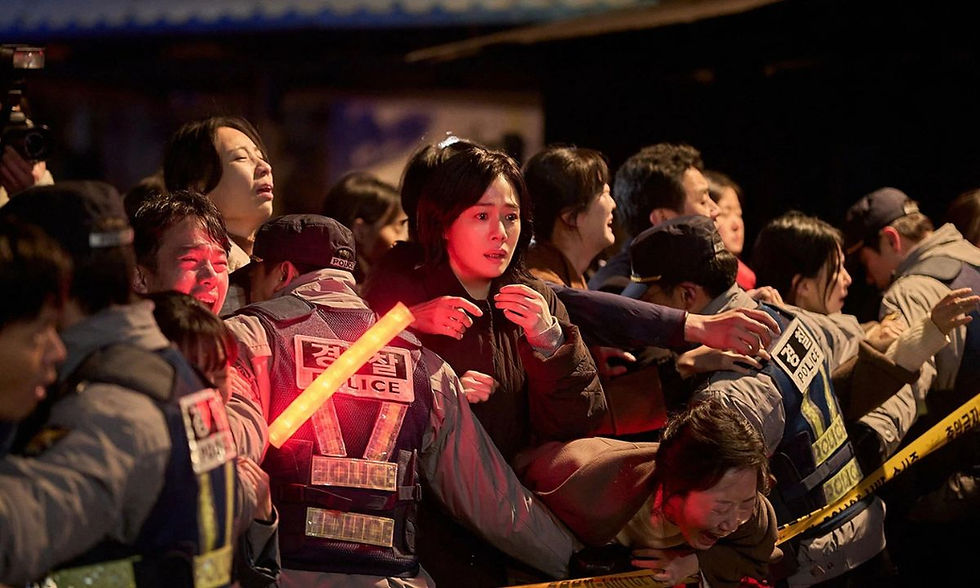
Mas enquanto Sang-ho é habilidoso no trabalho com os zumbis, seus thrillers policiais já não obtêm o mesmo êxito e não necessariamente contam com a mesma criatividade. Paradise Lost, lançado agora no Festival de Toronto (TIFF), novamente demonstra o interesse do cineasta em falar sobre tecnologia, explorando essa discussão a partir do luto e da inteligência artificial. Ainda que algo semelhante já tenha sido explorada em outras produções, inclusive há uma década, mantém-se interessante o debate: uma mãe perde o filho, ainda criança, após o desaparecimento do ônibus escolar para um acampamento. Dias depois, apenas alguns corpos de crianças foram encontrados, e o principal suspeito tirou a própria vida antes que pudesse ser interrogado. Diante da dor, uma empresa de inteligência artificial escaneou essas crianças, a partir de vídeos e imagens fornecidas pelos pais, e criou óculos de realidade virtual que pudessem personificá-las em casa para as famílias.
Ainda que o fator financeiro seja temática ignorada pelo filme, o custo psicológico aos pais das crianças falecidas se torna o cerne da narrativa, quando, nove anos depois, a protagonista segue dependente da tecnologia para suprimir a própria dor, ao passo que nunca conseguiu, de fato, aceitar o fato de que nunca mais verá o próprio filho. Enquanto transita por este caminho, Paradise Lost talvez não encontrasse substância para sustentar um longa de duas horas, mas fazia uma boa reflexão sobre os limites da tecnologia, e até onde um recurso interessante seria saudável para lidar com a perda de um ente querido.
A virada narrativa acontece quando, supostamente, o filho da protagonista é encontrado vivo. A partir de tal ponto, ainda que novamente uma ideia interessante, Sang-ho não parece saber exatamente para onde seguir com as duas propostas que escolheu articular em conjunto. O caminho é claro: agora que o filho estaria de volta, ela ainda precisa dos óculos? Mas a história começa a desandar na possível revelação de quem seria esse sujeito, se de fato for o filho desaparecido, através de um repórter investigando um mistério de assassino em série, suspeitando de algo perigoso nesse reencontro.
Para estender a narrativa e o clima de suspense, os personagens são obrigados a agir de maneiras impensáveis. Primeiramente, após o suposto encontro entre mãe e filho, o diálogo óbvio sobre o que aconteceu em nove anos não acontece. Tal momento é deslocado para muito tempo depois, quando, próximo do final, e em meio a uma situação de tensão e perigo, é feita uma série de revelações que levam o filme para um lugar completamente distinto. Ao invés de voltar-se à tecnologia, ao luto e a tensão de um possível reencontro, a resolução ao mistério encontrada pelo cineasta prefere um caminho genérico, que conecta homicídios em série pouco comentados no decorrer do filme, e cuja falta de desenvolvimento do personagem recém-encontrado compromete a própria ideia apresentada - o que mais nos perguntamos é por que ele nunca procurou a mãe em todo esse tempo?
Quando volta a atenção ao jornalista investigando o caso, o longa o transforma apenas em uma vítima para cair em uma armadilha óbvia, que o espectador consegue antecipar à enorme distância. Nesse sentido, pouco consegue conciliar todas as temáticas que levanta. O mistério dos assassinatos, os desaparecimentos do passado e o retorno no presente, aliados à inteligência artificial, não constroem uma jornada verossímil à protagonista. Sempre falta diálogo, interesse da direção em cutucar as feridas, e muitas vezes, de tão mal costuradas as ideias, acaba se parecendo com dois roteiros misturados em uma única história. O que no começo era um drama sobre luto e superação, a partir da inserção de um serial killer se torna um thriller investigativo genérico, ao voltar sua atenção para algo que tantos outros filmes já fizeram de formas melhores.
Ainda poderia surpreender se houvesse uma reviravolta relacionada à identidade do garoto encontrado - a escalação de Bae Hyeon-seong poderia sugerir algo nesse sentido, já que não combina com o adolescente que interpreta, vez que aparenta muito mais idade do que apenas quinze ou dezesseis anos -, o que também não acontece.
No fim das contas, Paradise Lost desafia, de muitas maneiras, o senso crítico do espectador, ao propor uma série de ideias que não consegue conciliar, bem como situações que, aos olhos do homem médio, são inverossímeis. Mesmo que se inicie muito bem, perde o impacto ao adotar caminhos genéricos, e desviar do caminho sobre IA como ferramenta de superação do luto e obsessão com o passado para um thriller genérico de assassino, que abandona justamente o valor dramático de toda a abordagem. É uma pena que desperdice uma boa produção e também uma boa ideia, de certa forma profética, em algo tão banal.
Avaliação: ★★
Paradise Lost (실낙원, 2026)
Direção: Yeon Sang-ho
Roteiro: Yeon Sang-ho e Ryu Yong-jae
Gênero: Thriller, Ficção Científica
Origem: Coreia do Sul
Duração: 101 minutos (1h41)
Sinopse: Nove anos após o desaparecimento do filho em um acidente envolvendo um ônibus escolar, So-young encontra conforto em uma tecnologia de realidade aumentada que lhe permite reencontrá-lo virtualmente. Quando o filho retorna à sua vida como um adulto que ela mal reconhece, ela se vê dividida entre a versão idealizada que criou e a desconcertante realidade diante de seus olhos.
English review
In Paradise Lost, Sang-ho promises a thriller about artificial intelligence as a tool for overcoming grief, but abandons the idea along the way to turn toward generic serial killers.

South Korean filmmaker Yeon Sang-ho's cinema began around two decades ago, in animation. Already working with serious themes through the medium, initially in short films and later in features, he gradually gained prestige and space, becoming well known in the field. His already relatively established career was completely transformed after his first live-action feature, Train to Busan. I even remember the day I watched the film for the first time, when I was still a teenager, on an unplanned trip to the cinema with a cousin. Expecting just another zombie movie like any other, the filmmaker knew how to use the medium to explore the creatures like few others - something George Romero knew how to do very well -, within a scenario of frantic contagion. Even with the limitations of a non-Hollywood film, at a time when Korean cinema had less investment than it does today, the director was creative enough to leave his mark in a sea of similar films.
At this year's Cannes Film Festival, he released another zombie film, Colony, with a completely different proposal, seeking to explore the theme of communication through science fiction, and creatures that, once infected, build a kind of neural network and share information and knowledge among themselves, like a colony, making the protagonists' survival increasingly difficult. His cinema is elegant in the composition of choreography and in the mise-en-scène of tension, articulated with care.
But while Sang-ho is skilled at working with zombies, his crime thrillers do not achieve the same success and do not necessarily possess the same creativity. Paradise Lost, now released at the Toronto International Film Festival (TIFF), once again demonstrates the filmmaker's interest in talking about technology, exploring this discussion through grief and artificial intelligence. Although something similar has already been explored in other productions, including a decade ago, the debate remains interesting: a mother loses her young son after a school bus disappears on a camping trip. Days later, only a few children's bodies were found, and the main suspect took his own life before he could be interrogated. Faced with the pain, an artificial intelligence company scanned these children using videos and images provided by their parents, and created virtual reality glasses that could embody them at home for their families.
Although the financial factor is a theme ignored by the film, the psychological cost to the parents of the deceased children becomes the core of the narrative, when, nine years later, the protagonist remains dependent on the technology to suppress her own pain, while she has never truly managed to accept the fact that she will never see her son again. As it follows this path, Paradise Lost perhaps would not have found enough substance to sustain a two-hour feature, but it offered a good reflection on the limits of technology, and on how far an interesting resource could be healthy for dealing with the loss of a loved one.
The narrative turn occurs when, supposedly, the protagonist's son is found alive. From that point onward, although once again an interesting idea, Sang-ho does not seem to know exactly where to go with the two proposals he has chosen to articulate together. The path is clear: now that her son would be back, does she still need the glasses? But the story begins to fall apart through the possible revelation of who this person might be, if he is indeed the missing son, through a reporter investigating a serial killer mystery and suspecting something dangerous about this reunion.
To extend the narrative and the atmosphere of suspense, the characters are forced to act in unthinkable ways. First, after the supposed encounter between mother and son, the obvious conversation about what happened over nine years does not take place. This moment is postponed until much later, when, close to the end, and amid a situation of tension and danger, a series of revelations takes the film to a completely different place. Instead of returning to technology, grief, and the tension of a possible reunion, the resolution to the mystery found by the filmmaker prefers a generic path, connecting a series of murders barely discussed throughout the film, and whose lack of development of the newly found character compromises the very idea presented - what we wonder most is why he never looked for his mother during all that time.
When it turns its attention to the journalist investigating the case, the feature turns him into nothing more than a victim who falls into an obvious trap that the viewer can anticipate from a mile away. In this sense, it accomplishes little in reconciling all the themes it raises. The mystery of the murders, the disappearances of the past and the return in the present, combined with artificial intelligence, do not construct a believable journey for the protagonist. There is always a lack of dialogue, of interest from the direction in probing the wounds, and often, because the ideas are so poorly stitched together, it ends up resembling two screenplays mixed into a single story. What begins as a drama about grief and overcoming loss becomes, with the insertion of a serial killer, a generic investigative thriller, turning its attention toward something so many other films have already done in better ways.
It could still have surprised us if there had been a twist related to the identity of the boy who was found - the casting of Bae Hyeon-seong could suggest something along those lines, since he does not match the teenager he plays, as he appears much older than merely fifteen or sixteen -, but that does not happen either.
In the end, Paradise Lost challenges the viewer's critical sense in many ways, by proposing a series of ideas it cannot reconcile, as well as situations that, through the eyes of the average person, are implausible. Even though it starts very well, it loses its impact by adopting generic paths and straying from the story about AI as a tool for overcoming grief and obsession with the past toward a generic killer thriller, abandoning precisely the dramatic value of the entire approach. It is a shame that it wastes a good production and also a good idea, in a certain sense prophetic, on something so banal.
★★


Comentários