

XXII FANTASPOA | COMPILADO – “The Peril At Pincer Point”, “Godzilla em Santa Fe”, “La Frecuencia Kirlian”, “CAMP”, “Interior”, “The Vile”, “The Arbiter”

Nesta publicação, o objetivo é trazer críticas em formato reduzido sobre alguns filmes que assisti durante minha cobertura da XXII Fantaspoa!
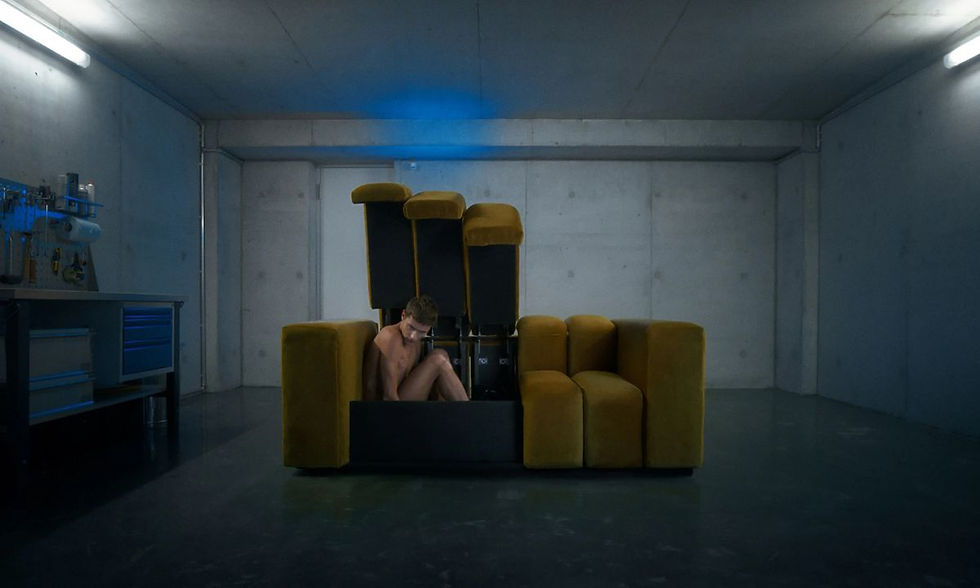
Cena de Interior, dirigido por Pascal Schuh, e vencedor do prêmio de Melhor Filme da Mostra Internacional do XXII Fantaspoa.
The Peril At Pincer Point (Idem, 2026)
Direção: Jake Kuhn and Noah Stratton-Twine
Origem: Reino Unido
Duração: 83 minutos
Avaliação: 3.5/5
A ideia abordada pelos diretores Jake Kuhn e Noah Stratton-Twine acerca da indústria e do cinema como arte coletiva torna-se, ao final, mais interessante do que a própria abordagem de The Peril at Pincer Point como um terror investigativo sobre uma obsessão.
Um tanto indeciso quanto a optar pela veia dramática ou humorística, o filme também se estende com um mistério incapaz de surpreender, quando a maldição que circunda a ilha pouco faz de diferente do que um formato já muito explorado pelo gênero, em uma fotografia preto e branco que serve mais à estética e ao capricho dos cineastas que ao filme em si, ou a história sendo contada.
No entanto, é muito eficaz pela maneira como explora a obsessão do protagonista pelo objetivo dentro de uma arte coletiva - o cinema -, e a forma como não necessariamente os devidos créditos são dados às pessoas certas. Então, fica a reflexão: será que o diretor merece a maior parte, ou mesmo todo o mérito sobre um filme?
English review
The idea explored by Jake Kuhn and Noah Stratton-Twine regarding the industry and cinema as a collective art ultimately proves more interesting than the film’s own approach in The Peril at Pincer Point as an investigative horror about obsession.
Somewhat undecided between a dramatic or humorous tone, the film also overstretches a mystery that fails to surprise, as the curse surrounding the island does little to differentiate itself from formulas long explored by the genre. Its black-and-white cinematography feels more like an aesthetic choice - a display of the filmmakers’ craft - than something that truly serves the film.
However, it is quite effective in the way it explores the protagonist’s obsession with his goal within a collective art form - cinema - and how proper credit is not always given to the right people. It leaves an interesting question lingering: does the director truly deserve most of the credit for a film?

Godzilla en Santa Fe (Idem, 2026)
Direção: Alexander Duré
Origem: Argentina
Duração: 61 minutos
Avaliação: 3.5/5
Como uma produção não autorizada pela Toho de Godzilla, a ideia que surgiu de uma piada fanmade tomou proporções maiores a partir da realização de um longa-metragem que mira na homenagem.
Com a cidade de Santa Fé no centro da narrativa, palco de poucas obras cinematográficas no próprio cinema argentino, e em sua maioria dramas tradicionais, o projeto de Alexander Duré é uma forma de também valorizar e engajar a comunidade local culturalmente, com a chance de seus habitantes poderem ver a si mesmos na tela do cinema, tal como o local onde vivem e por onde passam todos os dias. Ao mesmo tempo, é também uma longa piada que não necessariamente sabe até onde consegue se sustentar, diante de certas repetições desgastantes, e um próprio desenrolar narrativo que poderia ser mais ousado no humor nonsense e nas passagens absurdas.
Ainda assim, Godzilla en Santa Fe é um filme com inventividade para retratar o Godzilla em suas mais diversas formas, ao passo que também tece críticas à política local, à desinformação, e um retrato social do caos contemporâneo, que, ao engajar toda uma comunidade local, transborda a experiência cinematográfica para além da tela, com a representatividade de uma cidade cuja produção cinematográfica do país pouco demonstra interesse. Inclusive, adorei os disclaimers, com informações sérias e tiradas cômicas, tanto no início quanto no final do longa.
English review
As an unauthorized Godzilla production by Toho, what began as a fan-made joke grew into a feature-length film that clearly aims for homage.
With the city of Santa Fe at the center of its narrative - a setting rarely explored in Argentine cinema, which tends to favor more traditional dramas - Alexander Duré’s project also serves as a way to celebrate and engage the local community culturally, giving its residents the chance to see themselves on screen, as well as the places they inhabit in their daily lives. At the same time, it remains an extended joke that does not always know how far it can sustain itself, given certain repetitive elements and a narrative development that could have been bolder in its use of nonsensical humor and absurd situations.
Still, Godzilla en Santa Fe is a film full of inventiveness in how it portrays Godzilla in its many forms, while also offering critiques of local politics, misinformation, and a broader social portrait of contemporary chaos. By involving an entire community, it extends the cinematic experience beyond the screen, bringing representation to a city that national film production rarely highlights. I especially enjoyed the disclaimers - mixing serious information with comedic touches - both at the beginning and at the end of the film.

La Frecuencia Kirlian (Idem, 2026)
Direção: Cristian Ponce
Origem: Argentina
Duração: 94 minutos
Avaliação: 3.5/5
Em clima típico de creepypastas, é muito interessante como Christian Ponce articula suas histórias na antologia La Frecuencia Kirlian, ao passo que mescla a animação e o live-action numa rádio de uma pequena cidade argentina na década de 1980, a qual está prestes a desaparecer.
Enquanto criaturas sobrenaturais provam estar vivas naquela localidade, seus aspectos mitológicos pouco a pouco se desconstroem na força do próprio homem como espécie, em uma exploração analógica e metafórica da maldade humana em sua forma mais natural. Algumas escolhas estéticas chamam a atenção pela elaboração desta realidade, que vai dos personagens assustadores e das alegorias que imprime na imagem a partir dos acontecimentos, ao passo que contorna limitações orçamentárias trabalhando com a mescla entre o live-action, quando dentro do estúdio, e a animação de alta qualidade para os flashbacks, que transformam a pequena cidade de Kirlian também em uma personagem.
É bem criativo, embora nem todas as relações entre as histórias se conectem com tanta clareza, algo que o filme parece se esforçar para tornar propositalmente mais complexo. Mas ainda assim, um bom filme, de ótima atmosfera, e eficaz no trato da experimentação com a mescla entre as linguagens escolhidas.
English review
With a tone typical of creepypastas, it is fascinating how Christian Ponce structures his stories in the anthology La Frecuencia Kirlian, blending animation and live-action within a radio station in a small Argentine town in the 1980s - a place on the verge of disappearing.
As supernatural creatures prove to be very much alive in that location, their mythological aspects are gradually deconstructed by the force of humanity itself, in an analogical and metaphorical exploration of human evil in its most natural form. Certain aesthetic choices stand out in the construction of this reality, ranging from the unsettling character designs to the allegorical imagery shaped by the events, while also working around budget limitations through the combination of live-action - inside the studio - and high-quality animation for the flashbacks, effectively turning the town of Kirlian into a character of its own.
It is highly creative, even if not all the connections between the stories come together with complete clarity - something the film seems to deliberately complicate. Still, it remains a strong piece, with a great atmosphere and an effective approach to experimentation through its blend of different visual languages.

CAMP (Idem, 2026)
Direção: Avalon Fast
Origem: EUA
Duração: 111 minutos
Avaliação: 1/5
A experiência intimista proposta nos primeiros minutos de Camp se convertem em um show de autoindulgência no decorrer de duas horas em uma jornada de superação do luto que se converte num verdadeiro tiro no pé da própria ideia.
Se não bastasse a contemplação que pouco deixa margem para explorar de fato suas personagens, o filme crê que o fundo do poço é uma opção ao enfrentamento do trauma, quando junto de pessoas na mesma situação, e como se tentar superar não necessariamente fosse a melhor solução. Em contrapartida, também deixa uma ideia cristã, de punição pelo uso de álcool e drogas, tornando seus usuários em pessoas fadadas a infelicidade.
Então, nesses termos, o flerte da protagonista ao suicídio talvez não seja, para o filme, a pior saída para a questão que enfrenta, já que qualquer dos caminhos escolhidos seguem culminando na infelicidade e no fundo do poço, em um ciclo infinito de tristeza, depressão e desprazer pela vida. E somada toda essa contradição à bruxaria, mensagens cristãs, um complexo de maternidade e um agressor de mulheres, todas ideias escanteadas que em nada resultam ao longo do filme, quando esquecidas em seu decorrer, CAMP não é só problemático, quando desvaloriza o tempo investido pelo espectador.
Todo o clima de mistério e suspense construído ao final acabam em vão, quando nem mesmo o filme sabe para onde ir ou o que fazer com isso, sustentando-se em imagens bonitas, e satisfeito em acumular pretensões, sem verdadeiras ambições.
English review
The intimate experience proposed in the opening minutes of Camp gradually devolves into a kind of cinematic self-indulgence over the course of its two-hour runtime, in what should be a journey of overcoming grief but instead turns into a self-sabotaging exercise.
Beyond its contemplative tone - which leaves little room to truly explore its characters - the film seems to suggest that hitting rock bottom is a viable alternative to confronting trauma, even when surrounded by others going through similar struggles, as if attempting to heal were not necessarily the best path. At the same time, it introduces a vaguely Christian notion of punishment tied to alcohol and drug use, portraying users as people destined for unhappiness.
Within this framework, the protagonist’s flirtation with suicide unsettlingly comes across as not being treated as the worst possible outcome, since every path presented seems to lead to the same endpoint: misery, emotional collapse, and an endless cycle of sadness and dissatisfaction. Layered onto this are additional elements - witchcraft, religious messaging, a maternal complex, and an abusive male figure - all ideas that are introduced but ultimately sidelined, never meaningfully developed as the film progresses.
By the end, the atmosphere of mystery and suspense it attempts to build feels entirely wasted, as the film itself appears unsure of where to go or what to do with its own themes. It sustains itself on striking imagery and a sense of aesthetic ambition, but remains content with accumulating intentions rather than fulfilling them.
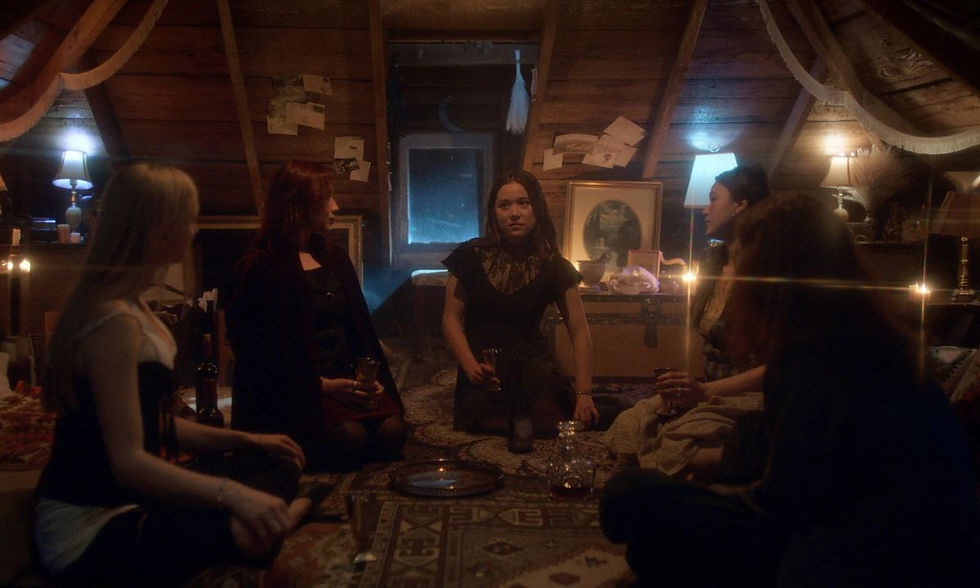
Interior (Idem, 2026)
Direção: Pascal Schuh
Origem: Alemanha
Duração: 96 minutos
Avaliação: 3.5/5
A invasão domiciliar, subgênero do thriller/horror sobre o qual Interior se estabelece, é o ponto mais provocativo do longa de Pascal Schuh, enquanto realizado por meio de um homem escondido dentro de um sofá, que adentra secretamente à residência de desconhecidos meramente para estudá-los como pessoas, sem, em tese, interferir no que acontecem entre aquelas paredes.
Na exploração dos sentimentos e da tragédia humana, que habita indiscutivelmente dentro de cada um de nós, trata-se de um filme formalmente interessante pela maneira como articula o desejo, o olhar voyeur e a intervenção como valores debatidos na relação de submissão que constrói em cena a partir de dois homens – o mandante, médico interessado nos vídeos e registros; e o contorcionista, que adentra à casa alheia através do sofá, trabalhando, ademais, uma relação amorosa de sentimentos dúbios e até conturbados.
Existem momentos inspirados, como a cirurgia e o soar do saxofone com o paciente caminhando em direção à luz, e a repetição de uma rotina metódica e ritualista na residência do médico, responsável pelos "experimentos" sociais. Mas é um filme que, ao mesmo tempo, não sabe exatamente para onde caminhar com tudo isso para além de seu formalismo estético e de um incomodo causado ao público. Talvez seja essa mesmo a ideia, de provocação sem um grande objetivo, algo completamente válido, mas que ainda assim deixa uma “pulga atrás da orelha”. No fim, creio que funciona, pois mesmo semanas após a sessão, continuo pensando no filme.
English review
Home invasion - the thriller/horror subgenre on which Interior is built - is the most provocative element of Pascal Schuh’s film, carried out through a man hidden inside a sofa, who secretly enters strangers’ homes merely to study them as people, without, in theory, interfering in what happens within those walls.
In its exploration of feelings and human tragedy - which undeniably resides within each of us - the film is formally intriguing in the way it articulates desire, the voyeuristic gaze, and intervention as values debated within the relationship of submission it constructs between two men: the instigator, a doctor interested in the recorded footage; and the contortionist, who infiltrates others’ homes through the sofa, while also developing a relationship marked by ambiguous and even troubled emotions.
There are inspired moments, such as the surgery and the sound of the saxophone as the patient walks toward the light, as well as the repetition of a methodical, ritualistic routine in the doctor’s residence, where the “social experiments” take place. At the same time, however, it is a film that does not seem to know exactly where to go with all of this beyond its aesthetic formalism and the discomfort it provokes in the audience. Perhaps that is precisely the point - provocation without a clear objective, something entirely valid, yet still leaving a lingering sense of unease. In the end, I believe it works, because even weeks after the screening, I find myself still thinking about it.

The Vile (Idem, 2026)
Direção: Majid Al Ansari
Origem: Emirados Árabes Unidos, EUA
Duração: 97 minutos
Avaliação: 2.5/5
Como um terror produzido nos Emirados Árabes, em muito surpreende a abordagem crítica do cineasta Majid Al Ansari acerca da cultura de "segunda esposa" sobre um mesmo teto, vivendo na mesma casa e num mesmo círculo familiar, algo comum aos países de cultura e religião islâmica.
No entanto, para além da abordagem, como um terror bastante tradicional de assombração e gravidez, que repete seus sustos em fórmulas óbvias e cíclicas, falta aprofundamento na mitologia - essa que parece existir tão somente em um epílogo desnecessário, que ao decidir explicar elementos da trama, como seus monstros e intenções ocultas de personagens, apenas os solta "do nada", sem desenvolver propriamente para além de ideias rasas já vistas outras tantas vezes, de maneira exageradamente expositiva e didática.
Ainda que deixe sugestões ao islamismo, ao mostrar uma mesquita logo na primeira cena, ao som do convite para a reza, nunca se aproveita de fato das oportunidades que possui para trabalhar o tema - talvez por receio, talvez por limitações impostas pelo país, ou talvez por desinteresse de fato.
English review
As a horror film produced in the United Arab Emirates, it is quite surprising to see filmmaker Majid Al Ansari take a critical approach to the “second wife” culture - in which multiple wives live under the same roof, sharing the same household and family circle, something common in countries shaped by Islamic culture and religion.
However, beyond this premise, as a fairly traditional horror film centered on haunting and pregnancy - one that repeats its scares through obvious and cyclical formulas - it lacks depth in its mythology, which seems to exist only in an unnecessary epilogue. In attempting to explain elements of the plot - such as its monsters and the hidden intentions of its characters - the film simply presents them “out of nowhere,” without properly developing them beyond shallow ideas that have been seen many times before, in an overly expository and didactic manner.
Even though it hints at Islam - showing a mosque in the very first scene, accompanied by the call to prayer - it never truly takes advantage of the opportunities it has to explore the theme - perhaps out of caution, perhaps due to limitations imposed by the country, or perhaps out of a lack of genuine interest.

The Arbiter (Idem, 2026)
Direção: Marc Price
Origem: Reino Unido
Duração: 109 minutos
Avaliação: 4/5
Já conhecido pelo trabalho enquanto diretor de cinema B, e consciente do baixo orçamento que dispunha para seu filme de ação, Marc Price aproveita ao máximo suas oportunidades em uma trama de confinamento e invasão, ao estilo Duro de Matar, em um universo de ampla violência, quase sem regras.
Sem se levar a sério, reconhece das limitações narrativas e formais para satirizar não apenas o gênero, como também as inúmeras produções genéricas que sequer conseguem encontrar alguma ideia para chamar de sua. A partir de um formato de invasão e defesa do espaço físico, e de uma aliança improvável entre chefes mafiosos, The Arbiter subverte convenções, abraça a baixa qualidade dos efeitos visuais – que ainda assim convencem –, e se diverte em meio à violência gráfica exagerada e cenas de luta não só bem coreografadas, como montadas com maestria, para o deleite do espectador, capaz de compreender cada movimento e sequência de luta sem ficar perdido.
Uma ótima surpresa do gênero, em um projeto realizado com evidente paixão.
English review
Already known for his work as a director of B-movies, and fully aware of the limited budget at his disposal for his action film, Marc Price makes the most of his opportunities in a confinement and invasion narrative - in the style of Die Hard - set within a universe of pervasive, almost lawless violence.
Without taking itself too seriously, the film acknowledges its narrative and formal limitations to satirize not only the genre, but also the countless generic productions that fail to come up with any idea to call their own. Drawing on a structure of invasion and defense of physical space, and an unlikely alliance between mob bosses, The Arbiter subverts conventions, embraces the rough quality of its visual effects - which, even so, remain convincing - and revels in exaggerated graphic violence and fight scenes that are not only well choreographed, but also masterfully edited, allowing the viewer to clearly follow every movement and sequence without confusion.
A great surprise within the genre, in a project made with evident passion.




Comentários